How to prepare your child for their first dental visit
When should the first visit be, what happens at the examination and how can you prepare at home? Tips for making a child's first dental visit a calm one.
Written by: Dentist Can SağlatPublished:
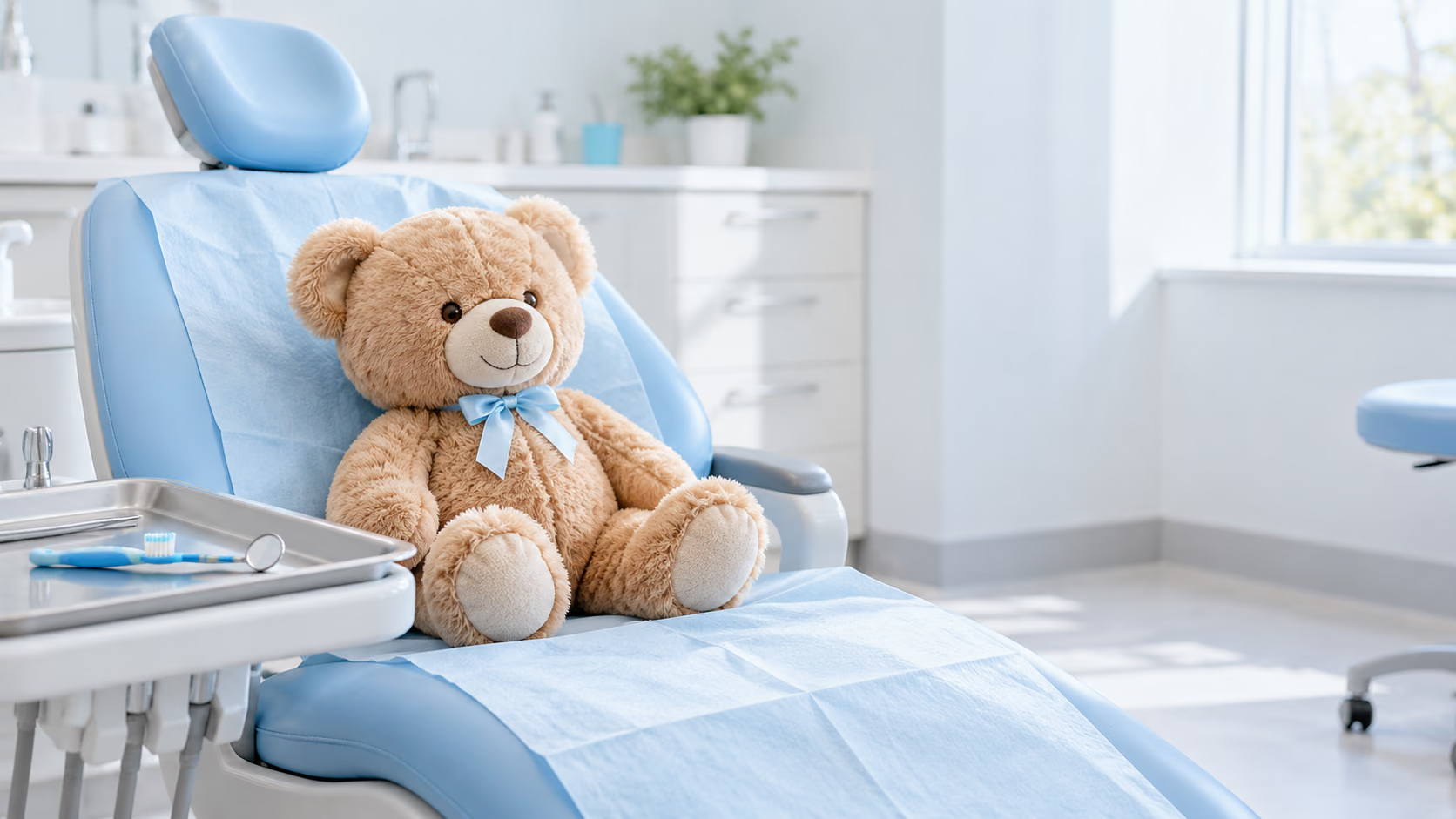
A child’s first meeting with the dentist shapes their attitude for years to come. There are a few things you can do so that this first meeting is a calm introduction rather than pain or an emergency.
When should the first visit be?
The right time for the first visit is when the first baby tooth comes through, and at the latest around the age of one. The aim of this early visit is not treatment; it is to get to know each other, check the development of the mouth and teeth and give you information about care at home.
A visit made without any complaint means your child remembers the dentist as a calm introduction, not as pain.
What happens at the examination?
At our practice we set aside one hour for each appointment, so we do not rush the first visit:
- Getting to know each other: we meet you and your child. We talk about their medical history and their eating and brushing habits.
- Getting used to things: we first show the chair, the light and the instruments we will use, and explain what they are for in words the child can understand.
- Examination: we usually examine young children on a parent’s lap.
- Explanation: we explain the findings and anything that needs to be done, and give advice on care at home.
The first visit usually does not include treatment. If your child is not ready that day, we do not insist; we continue getting to know each other at the next appointment.
How can you prepare at home?
- Before the visit, try not to use words that can cause anxiety, such as “it won’t hurt”, “needle” or “pull out”. Simply saying “we’ll count your teeth and check them” is enough.
- Do not use the dentist as a punishment or a threat.
- Be careful when talking about your own dental experiences in front of your child.
- Try to plan the visit for a time when your child is rested and not hungry.
Can you stay with your child during the examination?
Yes. With children, we work together with the parents. If you wish, you can stay with your child throughout the examination and treatment.
Why do baby teeth matter?
Baby teeth should not be neglected just because they will fall out anyway. They are needed for chewing and for speech to develop, and they hold the place for the permanent teeth coming through underneath. A baby tooth lost too early can narrow the space for the permanent tooth and lead to problems with the alignment of the teeth later on.