Dentist Can Sağlat · Bitez, Bodrum
Children's Dentistry
At our practice in Bitez, Bodrum we also examine and treat children. With children, what matters most is time: there needs to be room to get to know each other, to ask questions and to get used to things. As we set aside one hour for each appointment, we do not rush first visits and we work together with the parents throughout.
When should the first dental visit be?
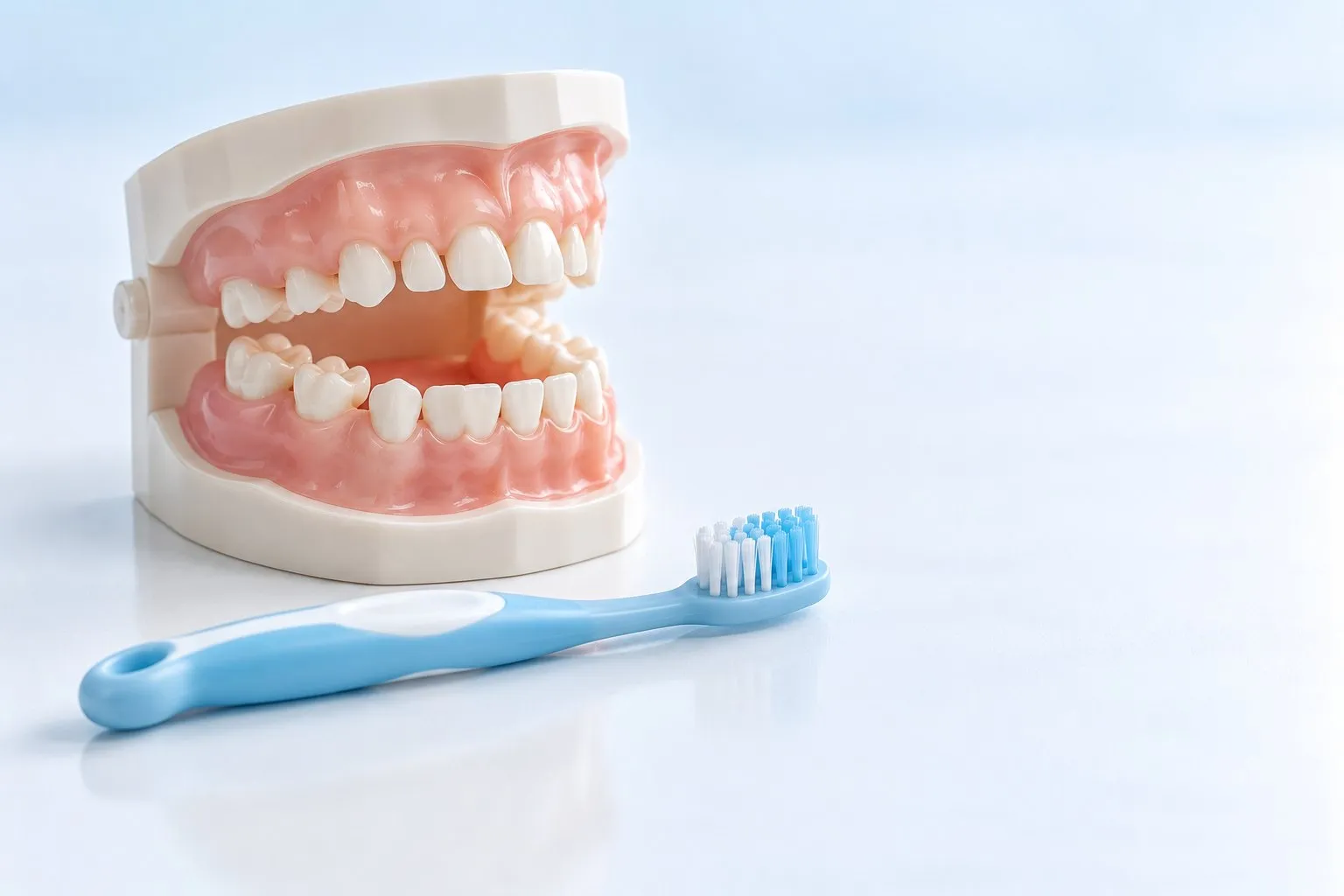
The right time for the first visit is when the first baby tooth comes through, and at the latest around the age of one. The aim of this early visit is not treatment but to get to know each other, check the development of the mouth and teeth and give you information about care at home.
A first visit without any complaint means that the child’s first meeting with the dentist is a calm introduction, not pain or an emergency.
How does the first visit go?
- Getting to know each other: we meet you and your child. We talk about their medical history and their eating and brushing habits.
- Getting used to things: we first show the chair, the light and the instruments we will use, and explain what they are for in words the child can understand.
- Examination: we usually examine young children on a parent’s lap. If needed, an X-ray is taken.
- Explanation: we explain the findings and anything that needs to be done, and give advice on care at home.
The first visit usually does not include treatment. If your child is not ready that day, we do not insist; we continue getting to know each other at the next appointment.
Why do baby teeth matter?
Baby teeth should not be neglected just because they will fall out anyway. Baby teeth:
- Are needed for chewing and eating.
- Help speech develop.
- Hold the place for the permanent teeth coming through underneath and guide them.
A decayed baby tooth can cause pain and infection. A baby tooth lost too early can narrow the space for the permanent tooth and lead to problems with the alignment of the teeth later on.
Children’s treatments at our practice
- Examination and check-ups: monitoring the development of the teeth and jaws, checking for decay.
- Fillings in baby teeth: removing the decay and repairing the tooth.
- Nerve treatment in baby teeth (pulpotomy): treatment to keep the tooth in the mouth when decay has reached the nerve.
- Space maintainer: an appliance used to keep the space for the permanent tooth when a baby tooth is lost early.
- Fissure sealants: the deep grooves on the chewing surfaces of the back teeth are covered with a flowable filling material. This reduces food getting trapped in the grooves and the risk of decay. It is especially useful for the first permanent molars, which start to come through around the age of six (the “six-year molars”).
- Orthodontic assessment: we monitor the development of the teeth and jaws and, if needed, plan orthodontic treatment at the right time.
Our aim is for children to get used to dental treatment in the dental chair, without being put to sleep. To do this we do not rush and, if needed, divide treatment into several short appointments. If your child’s situation requires more extensive treatment or treatment under general anaesthetic, we tell you clearly and refer you to a paediatric dentist or another dentist who provides this treatment.
Children who feel anxious about the dentist
Some children may be shy or anxious at their first visits. We see this as natural. Our approach:
- We explain first, then show, then do. The child knows in advance what to expect.
- We do not rush. When a local anaesthetic is needed, we wait for it to take full effect and check together with the child before we begin.
- We work together with the parents. If you wish, you can stay with your child during the examination and treatment.
Tips for parents
- Before the visit, try not to use words that can cause anxiety, such as “it won’t hurt”, “needle” or “pull out”; simply saying “we’ll count your teeth and check them” is enough.
- Do not use the dentist as a punishment or a threat.
- Be careful when talking about your own dental experiences in front of your child.
- Try to plan the visit for a time when your child is rested and not hungry.
Oral care at home
- Start brushing when the first tooth comes through. Use a soft children’s toothbrush with a small head.
- Toothpaste: use fluoride toothpaste from the first tooth.
- Under three: a smear the size of a grain of rice.
- Three to six: a pea-sized amount.
- An adult should do or supervise the brushing; your child should not swallow the toothpaste and should learn to spit it out. There is no need to rinse with plenty of water after brushing; spitting out the toothpaste is enough. This way the fluoride stays on the tooth surface for longer and keeps protecting it.
- At the check-up we give you advice tailored to your child’s risk of decay and whether they swallow toothpaste.
- Six and over: continue with a pea-sized amount of fluoride toothpaste. By this age the first permanent molar (the “six-year molar”) has come through; fluoride helps strengthen its enamel. At this stage it is also worth having fissure sealants applied to the six-year molars.
- Parents helping with brushing: even if your child wants to brush on their own, it is recommended that a parent finishes the brushing until the child’s manual skills have developed.
- Diet: how often sugary food and drinks are consumed matters as much as how much. Falling asleep with a bottle, especially of milk or a sugary drink, increases the risk of decay in baby teeth.
- Check-ups: we decide together how often regular check-ups are needed, based on your child’s risk of decay.
A broken or knocked-out tooth
If a tooth breaks or is knocked out after a fall or a knock:
- If a permanent tooth is knocked out: hold the tooth by the crown, not the root. If it is dirty, rinse it briefly with milk or saline; do not brush it. Keep it in milk or saline and see a dentist as soon as possible.
- If a baby tooth is knocked out: a baby tooth is not put back; even so, an examination is needed to check the surrounding tissues and the permanent tooth underneath.
- If a tooth is broken: keep the broken piece and bring it to the examination.
Frequently asked questions
When should I first take my child to the dentist?
When the first baby tooth comes through, and at the latest around the age of one. This visit is mainly for getting to know each other, a check-up and giving information to the parents.
Baby teeth fall out anyway; does decay in them need treating?
Yes. A decayed baby tooth can cause pain and infection; losing it early can narrow the space for the permanent tooth. We assess which treatment is needed at the examination.
Can I stay with my child during the examination?
Yes. With children, we work together with the parents. We usually examine young children on a parent’s lap.
My child is afraid of the dentist; what can I do?
Using simple, calm language before the visit and not using the dentist as a threat helps. At the practice we do not rush either: we explain and show first, then start. If your child is not ready that day, we continue getting to know each other at the next appointment.
Do thumb-sucking and dummies affect the teeth?
Thumb-sucking and dummy use that continue for a long time can affect the development of the teeth, jaws and face. For the development of the jaw and face, it helps to stop these habits when the child is weaned, or at the latest before the age of two. We discuss how to stop at the examination, based on your child’s situation.