Dentist Can Sağlat · Bitez, Bodrum
Digital Impressions
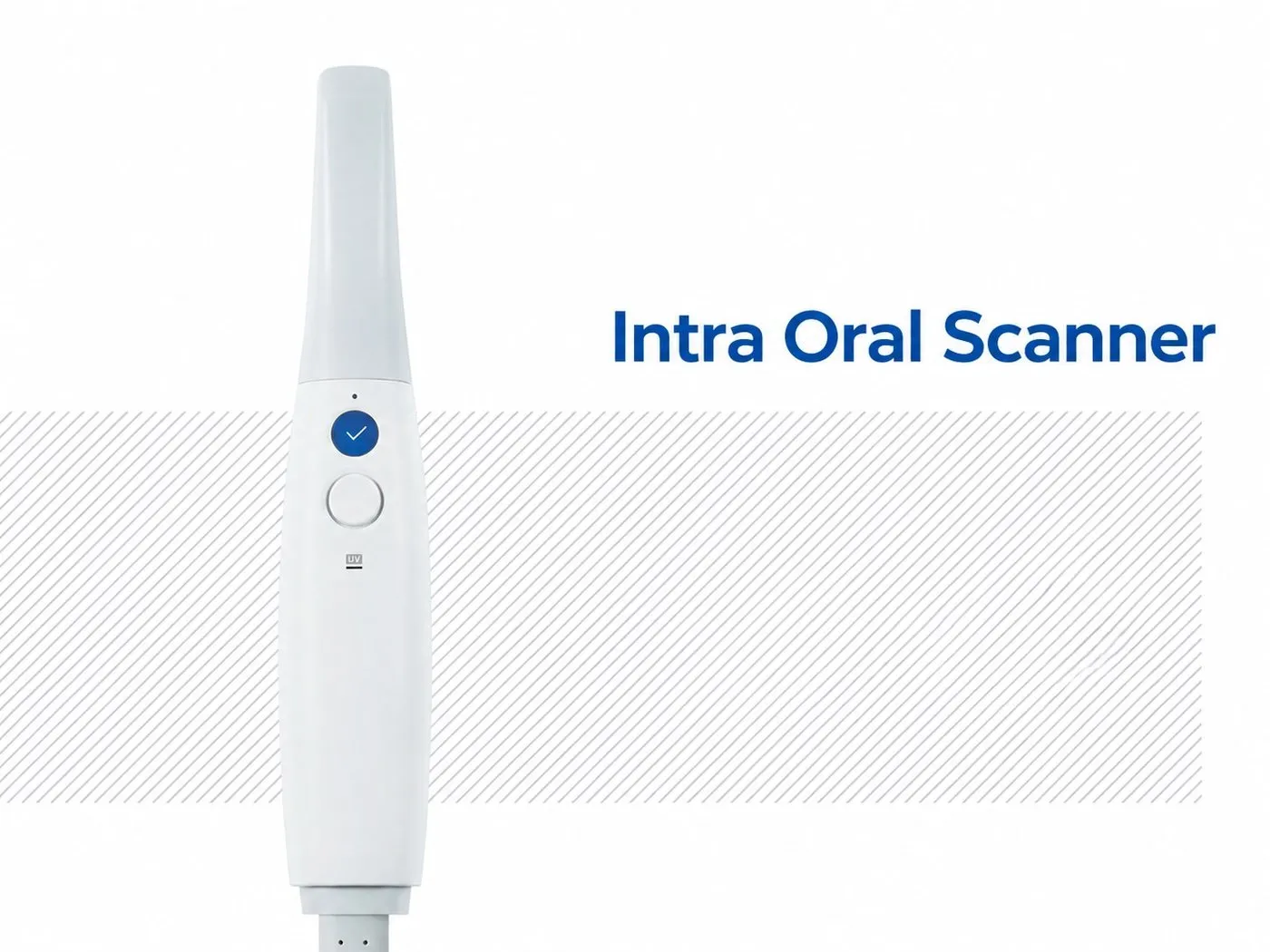
A digital impression is a three-dimensional record of the teeth and surrounding tissues taken with an intraoral scanner. With the conventional method, a tray filled with impression material is placed in the mouth and left to set; with a digital impression, a small scanner head is moved over the teeth and the image builds up on screen. On this page we explain how a digital impression is taken and which treatments it is used for at our practice in Bitez, Bodrum.
How is it taken?
- Preparation: the teeth to be scanned are dried; if needed, the gum margin is made visible.
- Scanning: the scanner head is moved slowly over the teeth. The lower jaw, the upper jaw and the bite are recorded separately.
- Checking: the three-dimensional image is reviewed on screen; if any area is missing or unclear, it is scanned again.
You can rest your mouth from time to time during the scan. As no impression material is used, it can be more comfortable for patients who feel like gagging with conventional impressions.
Which treatments is it used for?
- Crowns and bridges: to record the prepared tooth and the opposing teeth.
- Crowns and bridges on implants: to prepare the restoration once fusion is complete.
- Orthodontics: for treatment planning and to make clear aligners.
- Night guards: so that the guard can be made in the laboratory to fit the teeth.
- Implant planning: combined with CT data to make a surgical guide.
- Records and monitoring: to compare tooth wear or gum changes over time.
Seeing it together on screen
The scan image can be enlarged on screen and rotated in every direction. We can show you wear, cracks or bite problems on this image and talk through the treatment together. This is part of the principle we value in slow dentistry: moving forward by explaining and planning together.
3D printer
Using the data from a digital impression, the 3D resin printer at the practice can produce:
- Models: a physical model of the teeth and jaw, used for planning and checking.
- Temporary crowns: a temporary cap that protects the tooth until the permanent crown is ready.
- Permanent crowns: in some cases, permanent crowns in ceramic-reinforced resin.
- Surgical guides: a guide that helps place the implant in the planned position.
The surface of temporary restorations and some ceramic restorations can also be finished at the practice with a light-cured resin glaze.
Limitations
A digital impression may not replace a conventional impression in every case. For removable dentures we prefer a conventional impression, to record the gums and surrounding tissues in detail. In some cases where the gum margin is very deep, a conventional impression may also be more suitable. We decide which method to use according to the treatment.
Frequently asked questions
Is a digital impression painful or uncomfortable?
The scan is done with a head moved over the teeth; nothing is done to the tooth or gum. As the mouth needs to stay open for a while, you can rest now and then.
How long does a digital impression take?
It depends on the size of the area to be scanned; a single tooth takes a short time, both full jaws can take longer. We finish once we have checked the image.
Are X-rays used during scanning?
No. The intraoral scanner works with visible light; it does not use X-rays.
Can a digital impression be used for every treatment?
It can be used for many treatments, but in some cases a conventional impression may be more suitable. We explain which method will be used in your treatment plan.