Dentist Can Sağlat · Bitez, Bodrum
Fillings and Root Canal Treatment
Fillings and root canal treatment are the two most common ways of keeping decayed, broken or worn teeth in the mouth. On this page we explain when each is needed, how it is done and the standards we work to at our practice in Bitez, Bodrum.
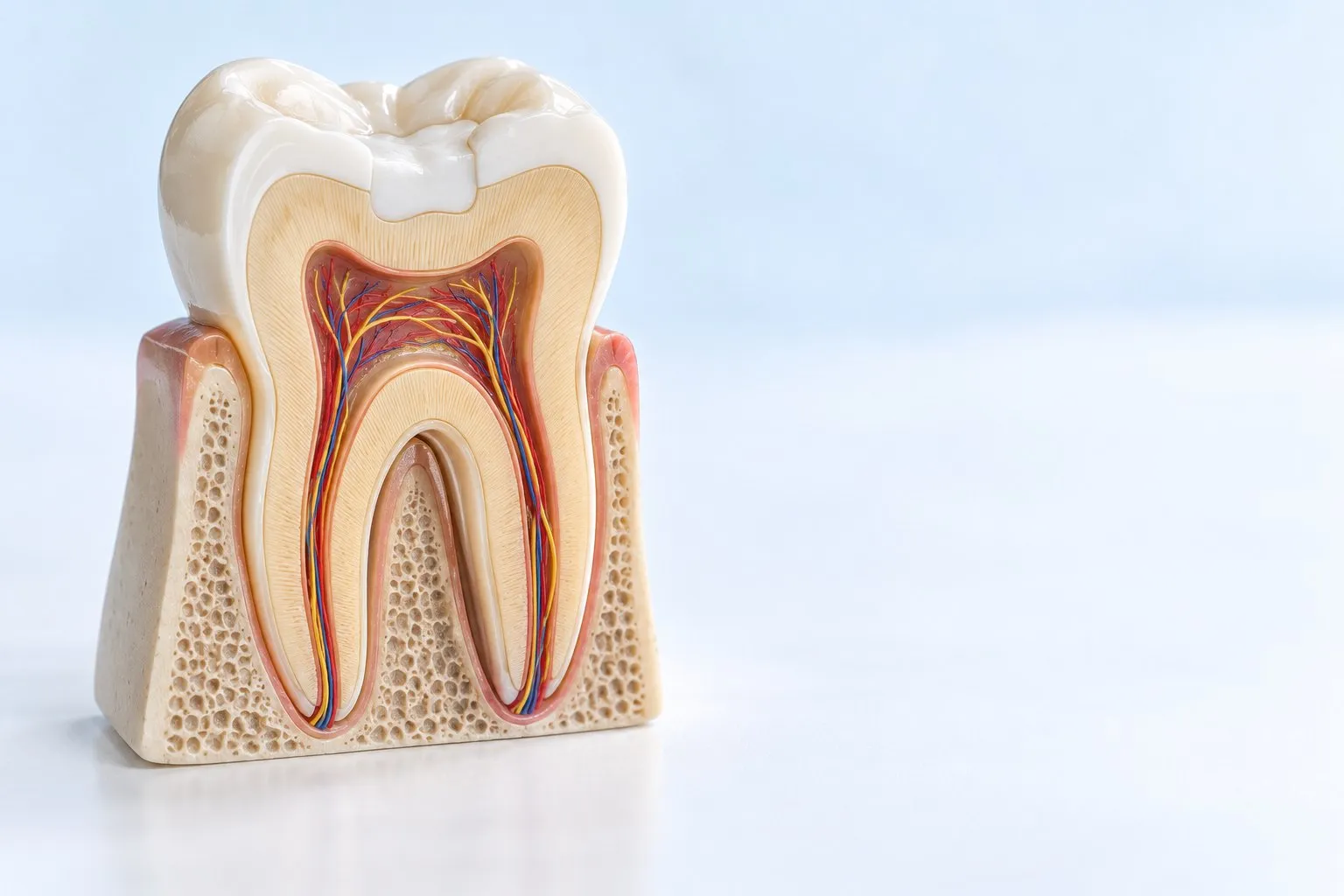
Fillings
If decay has not yet reached the nerve of the tooth (the pulp), the decayed tissue is removed and the cavity is closed with filling material.
For our fillings we use tooth-coloured composite materials that bond to the tooth. The shade is chosen to match the neighbouring teeth. For teeth that have lost a lot of structure, an inlay or onlay made in the laboratory or digitally, or a crown, may be more suitable than a filling.
How is a filling done?
- Examination and X-rays: if needed, the depth of the decay is assessed with a periapical X-ray.
- Anaesthetic: when needed, a local anaesthetic is given; we wait for it to take full effect.
- Isolation: whenever possible, the tooth is separated from saliva with a rubber sheet (rubber dam).
- Cleaning and filling: the decayed tissue is removed, and the filling is placed layer by layer and hardened.
- Finishing: the bite is checked, and the filling is shaped and polished.
Root canal treatment
When decay or a crack reaches the nerve of the tooth, the nerve can become inflamed or die. This can cause throbbing pain, lingering sensitivity to hot and cold, pain when chewing or swelling. In root canal treatment, the inflamed tissue inside the tooth is removed, and the canals are shaped, disinfected and sealed. The aim is to keep the tooth in the mouth without extracting it.
How is root canal treatment done?
- Examination and X-rays: the roots of the tooth and the surrounding bone are assessed with a periapical X-ray.
- Anaesthetic: a local anaesthetic is given; we wait for it to take full effect and check with you before we begin.
- Isolation: whenever possible, a rubber dam is used. This keeps saliva out of the canals and the working area clean.
- Cleaning and shaping: the canals are cleaned, shaped and disinfected.
- Root filling: the canals are sealed with a suitable material and checked with an X-ray.
- Restoring the top of the tooth: the tooth is strengthened with a filling or a crown. Especially for back teeth, a crown after root canal treatment can reduce the risk of fracture.
Depending on the condition of the tooth, root canal treatment is completed in one or more appointments.
Risks and things to be aware of
After a filling there may be sensitivity to hot and cold for a while. After root canal treatment there may be tenderness when chewing for a few days. In some teeth the canals can be very curved or narrowed, which makes treatment more difficult; rarely, the treatment may need to be repeated, or root-end surgery or extraction may be needed. A tooth that has had root canal treatment is more prone to fracture if it is not restored.
Frequently asked questions
Is root canal treatment painful during or after the procedure?
The procedure is carried out under local anaesthetic and we wait for the anaesthetic to take full effect. For a few days after treatment there may be tenderness when chewing; we explain separately what to do during this time.
Why can a tooth that has had root canal treatment change colour?
Because the nerve tissue is removed and because of some materials, the tooth can darken over time. In that case, internal whitening of the tooth or a crown can be considered.
Tooth-coloured filling or amalgam?
Tooth-coloured composite fillings bond to the tooth and blend in with the neighbouring teeth. Amalgam is a metal alloy. At our practice we use composite for fillings; an amalgam filling can be placed only if the patient specifically asks for it.
Can fillings or root canal treatment be done during pregnancy?
The most suitable time for treatment is usually the second trimester (months 4–6). In urgent situations, treatment under local anaesthetic is also possible at other times. Always tell us before the examination that you are pregnant.