Dentist Can Sağlat · Bitez, Bodrum
Extractions and Oral Surgery
Our priority is to keep the tooth in the mouth; however, in some cases an extraction or a minor surgical procedure may be the most suitable option. On this page we explain tooth extraction and the oral surgery procedures carried out at our practice in Bitez, Bodrum.
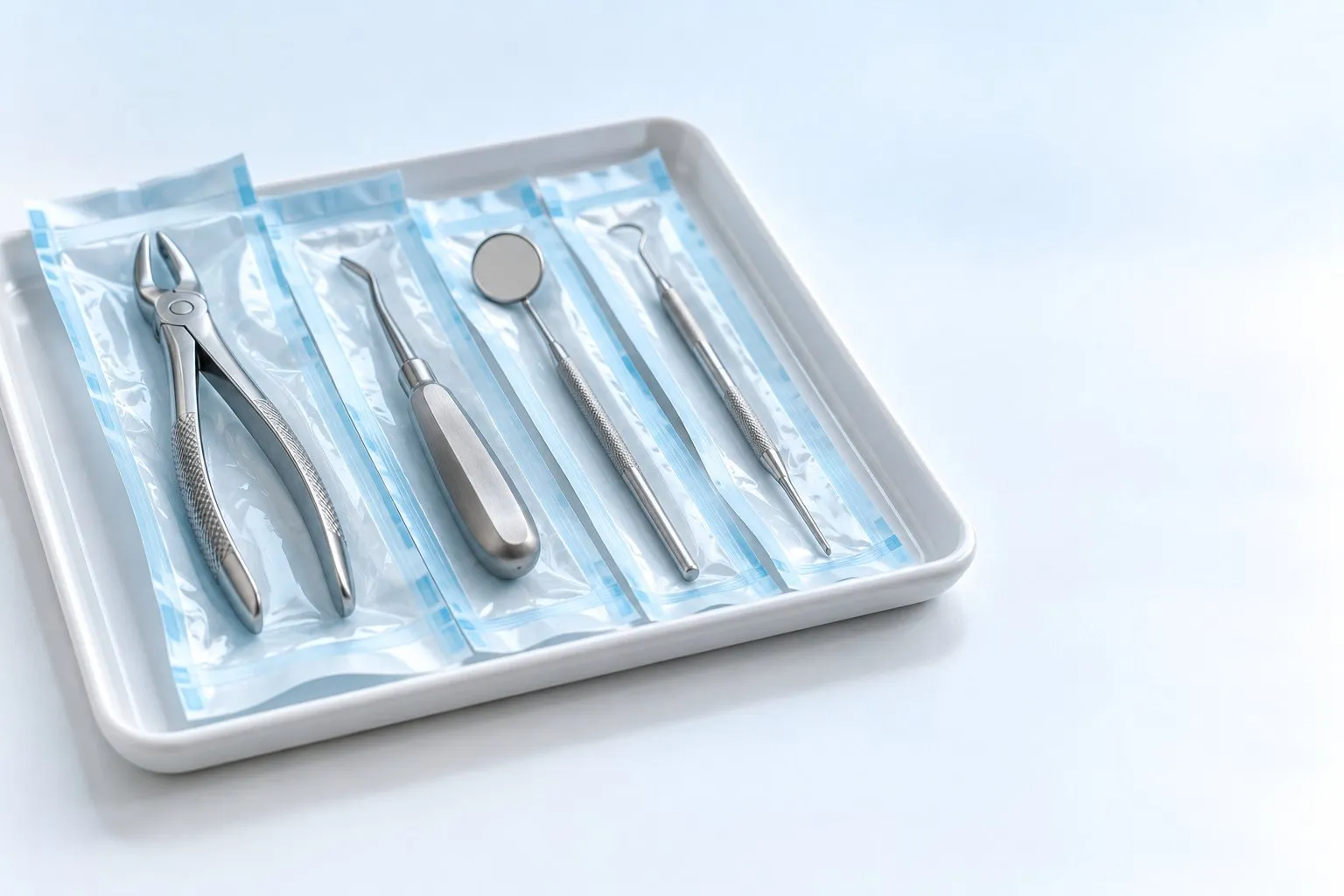
When is an extraction needed?
- Teeth too broken down to be saved with a filling or root canal treatment
- Teeth with a fractured root or that are very loose
- Teeth that cause recurring inflammation and cannot be treated
- When an orthodontic treatment plan requires it
- Impacted or partly erupted teeth that cause problems
Before deciding on an extraction, we discuss together the options for saving the tooth and how the gap could be restored afterwards (an implant, bridge or denture).
Impacted wisdom teeth
Wisdom teeth may not come through fully when there is not enough room in the jaw. Not every impacted tooth needs to be removed. Extraction is usually recommended when:
- The tooth causes recurring inflammation and swelling
- It causes decay or root damage to the neighbouring tooth
- It carries a risk of decay because it cannot be cleaned
- There is a growth such as a cyst around it
Impacted teeth that cause no problems and can be monitored with regular check-ups can be left in place.
Other surgical procedures
- Root-end surgery (apicectomy): for some teeth where inflammation at the root tip continues despite root canal treatment, the root tip and the inflamed tissue around it are removed surgically.
- Sinus lift: when there is not enough bone height for an implant at the back of the upper jaw, the floor of the sinus is raised and bone support is provided.
- Implant surgery: placing the implant in the jawbone.
How does the process work?
- Examination and imaging: a panoramic or periapical X-ray is taken. For impacted teeth close to the nerve or sinus, three-dimensional imaging (a CT scan) may be requested; we refer you to an imaging centre for the scan.
- Medical history: we discuss your medicines (especially blood thinners and bone medications) and your general health. If needed, we ask you to get the opinion of the doctor who prescribed the medicine.
- Explanation: we explain the procedure, the healing process and the possible risks.
- Procedure: carried out under local anaesthetic. We wait for the anaesthetic to take full effect and check with you before we begin.
- Afterwards: we explain what to do and what to avoid; if needed, we plan a check-up appointment.
After the procedure
- In the first hours, bite on the gauze pad and wait for the bleeding to stop.
- On the first day, applying cold to the face from the outside at intervals helps reduce swelling.
- On the first day, do not rinse your mouth, drink through a straw or smoke; these can dislodge the blood clot.
- Avoid hot and hard foods for a few days.
- Take any recommended medicines as directed.
Risks and things to be aware of
After extractions and surgical procedures there may be swelling, bruising, limited mouth opening and pain lasting a few days. Less often, prolonged bleeding, inflammation of the extraction socket (dry socket), temporary or permanent numbness with lower teeth close to the nerve, or an opening into the sinus in the upper jaw may occur. We explain these risks, and any specific to your situation, before the procedure.
Frequently asked questions
Do wisdom teeth have to be removed?
No. Extraction is recommended if there is not enough room in the jaw, if the tooth damages the neighbouring tooth, causes recurring inflammation or carries a risk of decay. Teeth that cause no problems can be left in place and monitored.
Can a tooth be extracted when there is an abscess or inflammation?
If there is acute inflammation and widespread swelling, it is usually preferable to bring the inflammation under control first and then extract the tooth. We decide at the examination, based on your situation.
I take blood thinners; can I have a tooth extracted?
In most cases yes, but you should not stop the medicine yourself. Tell us your medicine and dose at the examination; if needed, we plan together with the doctor who prescribed it.
When can I eat normally after an extraction?
Once the numbness has worn off, you can start with soft, lukewarm food. It is recommended not to chew hard food on the extraction side for a few days.