Night guards: daily cleaning and storage
How should you clean your night guard every morning, where should you keep it and when should you bring it in? Short tips to keep it fitting well.
Written by: Dentist Can SağlatPublished:
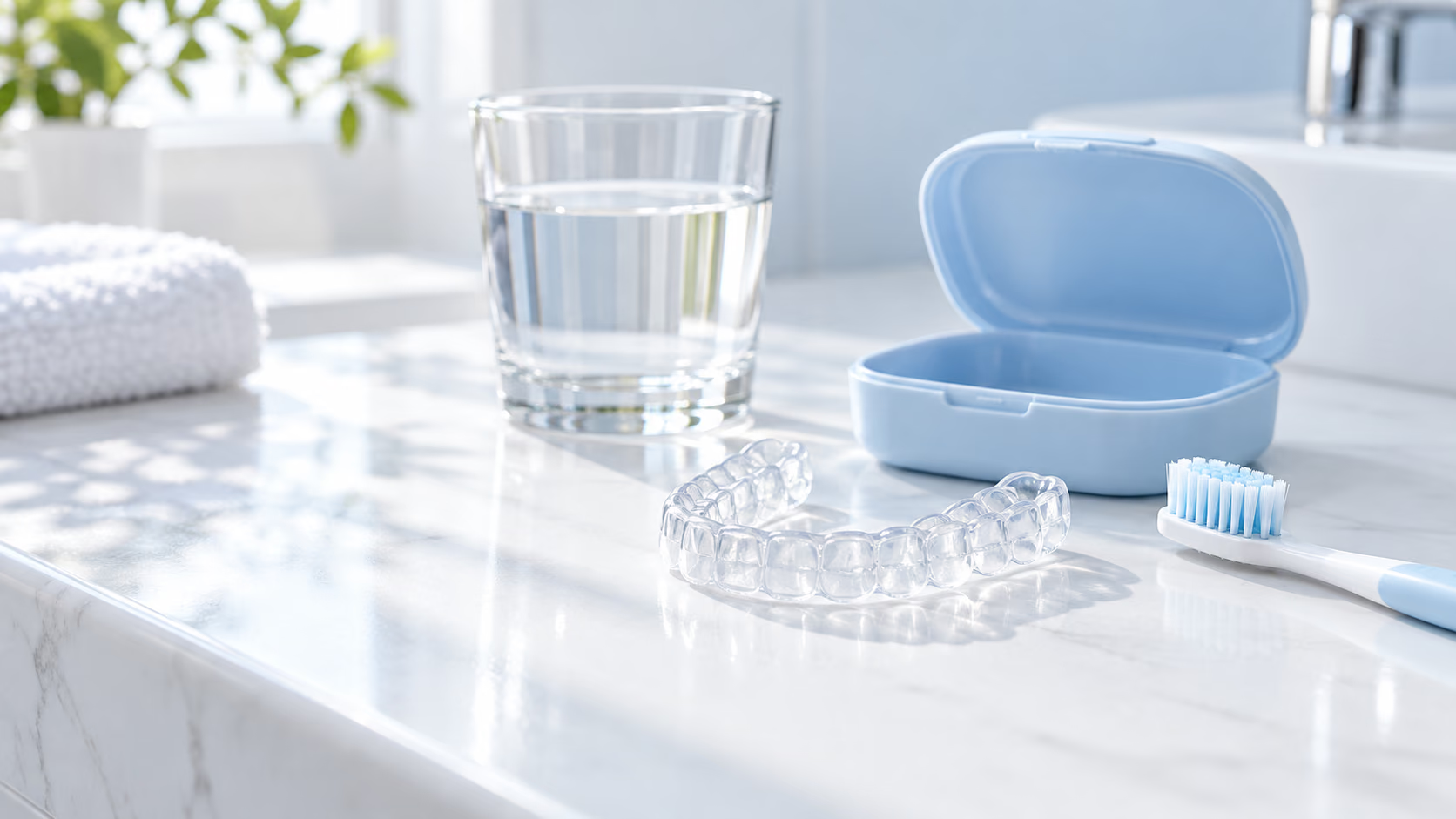
A night guard is a custom-made appliance that protects the teeth against clenching and grinding (bruxism). Keeping it clean and well fitting means it keeps protecting your teeth. In this article you will find a few simple tips for daily care.
Clean it every morning
- After taking the guard out, rinse it with lukewarm water.
- Clean it gently with a soft brush.
- Dry it and keep it in its case.
Do not use hot water. Hot water can distort the guard, and a distorted guard no longer fits the teeth properly.
Keep it in its case
Leaving the guard out, wrapping it in a napkin or carrying it in your pocket increases the risk of it breaking or getting lost. When you are not wearing it, always keep it in its own case.
When should you bring it in?
- If you see a crack, a break or noticeable wear,
- If the guard is uncomfortable or no longer fits the teeth as it did,
- At your regular check-ups.
A guard can wear over time. We assess its fit and wear at check-ups and replace it if needed.
The first few nights
For the first few nights there may be a feeling of something foreign in the mouth and more saliva; most people get used to it quickly. If the guard is uncomfortable, you should come in for an adjustment.
Why are ready-made guards not recommended?
Ready-made “boil and bite” guards may not fit the teeth properly and can affect the bite. We have night guards made individually in the laboratory from a digital impression of your teeth.
A guard protects the teeth; it does not remove the cause
There is no single cause of clenching; factors such as stress, sleep patterns, certain medicines, caffeine and alcohol can play a part. A night guard protects the teeth against wear, but on its own it does not remove the cause of the clenching. If needed, we also talk about managing stress and sleep habits at the examination.