Dentist Can Sağlat · Bitez, Bodrum
Night Guards
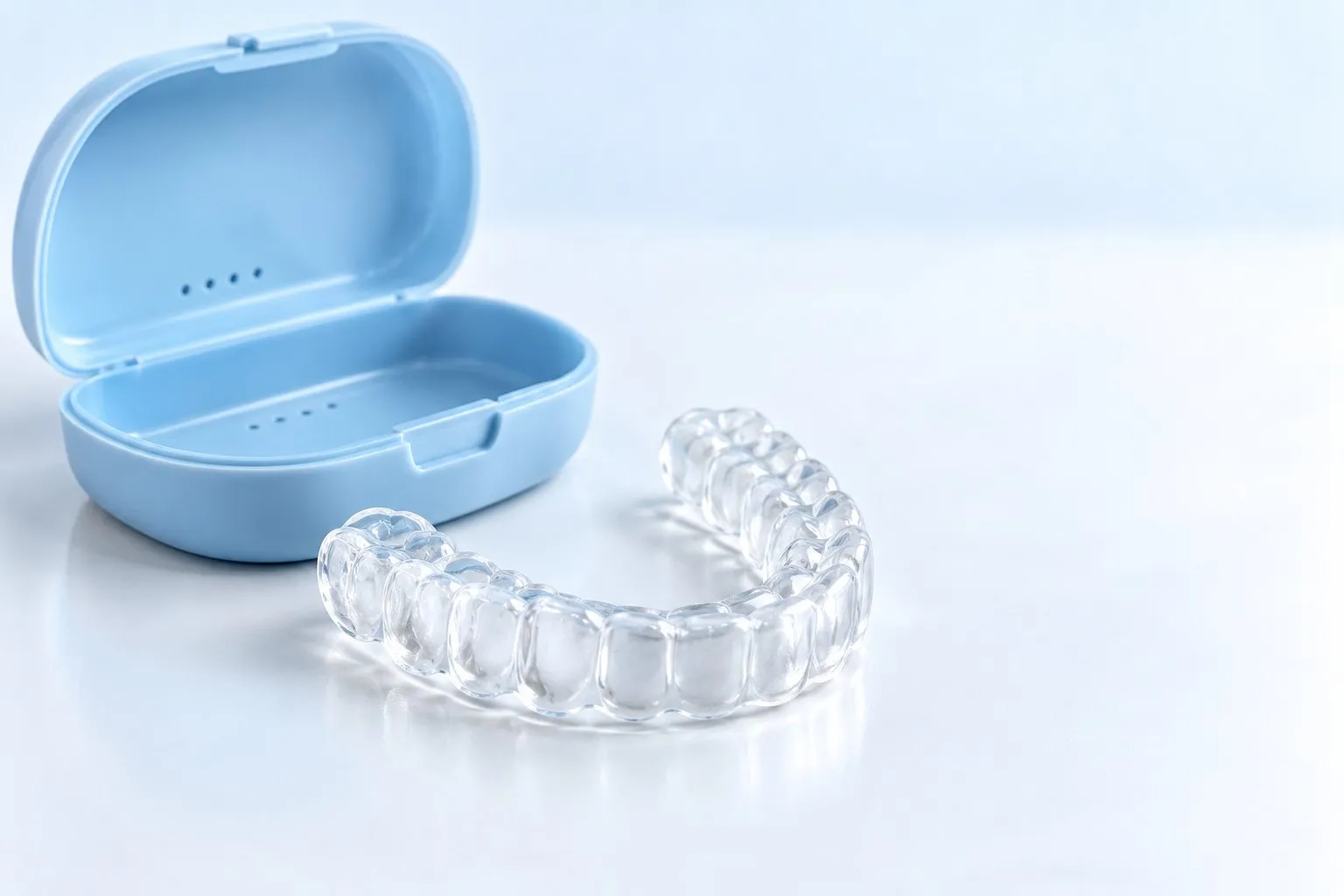
Clenching and grinding the teeth (bruxism) usually happens during sleep, without you being aware of it. Over time it can cause wear and cracks in the teeth and tiredness in the jaw muscles. A night guard is a custom-made appliance used to protect the teeth against these forces. On this page we explain the signs and how a night guard is made at our practice in Bitez, Bodrum.
Signs
- Tired or aching jaw muscles in the morning
- Headaches at the temples, especially in the morning
- Flattened or worn teeth, chipped edges or cracks
- Sensitivity to hot and cold
- A partner hearing grinding at night
- Fillings or crowns breaking repeatedly
What causes it?
There is no single cause of clenching. Factors such as stress, sleep patterns, certain medicines, caffeine and alcohol can play a part. That is why a night guard protects the teeth but does not, on its own, remove the cause of the clenching. If needed, we also talk about managing stress and sleep habits.
What does a night guard do?
- It reduces wear by stopping the teeth from grinding directly against each other.
- It helps protect fillings, crowns and bridges from breaking.
- It can help spread the load on the jaw muscles.
A night guard is made for you individually. Ready-made “boil and bite” guards may not fit the teeth properly and can affect the bite.
How does the process work?
- Examination: tooth wear, the jaw joint and the jaw muscles are assessed.
- Digital impression: the teeth are scanned with an intraoral scanner and the bite is recorded.
- Making the guard: the guard is made in the laboratory from the digital impression.
- Fitting and adjustment: the guard is tried in the mouth and the bite is adjusted; we explain how to wear and clean it.
- Check-ups: after the first weeks and at regular check-ups, the fit and wear of the guard are assessed.
Wearing and caring for it
- The guard is usually worn at night while you sleep.
- Every morning it should be cleaned with lukewarm water and a soft brush, dried and kept in its case. Hot water can distort the guard.
- If the guard cracks, breaks or shows noticeable wear, you should bring it in to be checked.
Frequently asked questions
How is teeth grinding treated?
A night guard protects the teeth against wear. It is supported by advice on stress management, sleep and habits that address the cause of the clenching. If there is a significant problem with the jaw joint, a different assessment may be needed.
Is it hard to get used to a night guard?
For the first few nights there may be a feeling of something foreign in the mouth and more saliva; most people get used to it quickly. If the guard is uncomfortable, you should come in for an adjustment.
Will a night guard stop jaw pain?
It can help reduce the load on the jaw muscles, but not every jaw pain is caused by clenching. We assess the source of the pain at the examination.
How long is a night guard used for?
The guard continues to be used for as long as the clenching habit continues. A guard can wear over time; we assess it at check-ups and replace it if needed.